

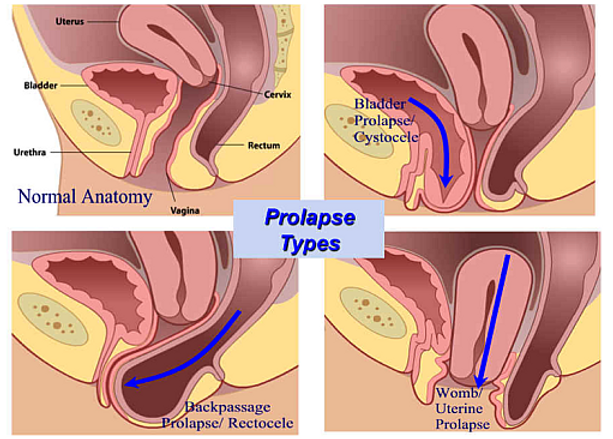
A pelvic organ prolapse occurs when one or more pelvic organs descend from their normal resting position. This definition often raises an important question: what is considered a “normal” resting position?
The answer varies between women. It can differ depending on whether a woman has had children, her age, and whether she is pre- or post-menopausal. For this reason, prolapse is not defined by anatomy alone.
How Is Prolapse Defined?
The diagnosis of prolapse depends on two key factors:
1. Anatomical Position
From an anatomical perspective:
- If the bladder or bowel is prolapsed, it must be positioned within 1 cm above the vaginal opening
- If the uterus or vaginal apex is prolapsed, the cervix must be within 4–5 cm above the vaginal opening
2. Symptoms (Bother)
Importantly, the prolapse must also be bothersome to the woman. This may include symptoms such as a vaginal bulge, pressure, discomfort, or functional limitations.
Both anatomical change and symptom bother are required for a prolapse to be considered clinically significant.
Which Organs Can Prolapse?
There are three pelvic organs supported by the pelvic floor:
- Bladder
- Uterus
- Bowel
Any one of these organs, or a combination of two or all three, can prolapse. In some cases, one organ may prolapse slightly and still support another. In other situations, one organ may descend and draw another down with it.
These relationships are particularly important to assess, especially if surgical repair is being considered.
All pelvic organ prolapses occur through the vagina, which is where a bulge is typically felt. This is different from a haemorrhoid, which originates from the anus.
Management of Prolapse
The management of prolapse is individualised and depends largely on the size of the prolapse and symptom severity.
Research shows that a small prolapse (Stage 2) can often be managed conservatively with:
- Pelvic floor muscle training
- Pelvic floor muscle training with or without a pessary
A prolapse larger than Stage 2 is more likely to require additional intervention. This may include pessary use or, in some cases, surgery.
What Is a Pessary?
A pessary is a silicone device inserted into the vagina to provide support to the prolapsed organ(s).
Pessaries can be fitted and managed by:
- A gynaecologist
- A women’s health physiotherapist
- A women’s health nurse with appropriate training.
- Pessary management is highly individual. Some women are taught how to insert and remove the pessary themselves and can self-manage. In other cases, the pessary is inserted by a health professional and reviewed at 3-, 6-, or 12-month intervals.
Some women may only require a pessary temporarily, for example:
- Around their menstrual period
- During activities such as gym training or heavy lifting
Your specific needs should always be discussed with your treating health professional.
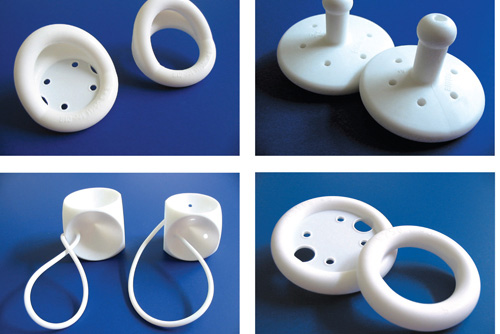
Pessaries come in a variety of shapes and sizes. The ring pessary is the most commonly used, but other options include cube and mushroom-shaped pessaries. The most appropriate type will be determined by your health provider.
Additional Strategies That May Help
Management of prolapse is multifactorial. Other strategies that may assist include:
- Vaginal moisturisers or oestrogen cream
- Reducing heavy lifting
- Wearing supportive garments
- Resting during the day with your feet elevated
Surgical Considerations
If surgery is required, there are several surgical options that should be discussed in detail with your surgeon.
A common misconception is that a hysterectomy alone will solve prolapse. However, removing the uterus may not address the problem if the bladder or bowel is the primary contributor to the prolapse.
Pelvic floor muscle training before and after surgery may also be beneficial, particularly if bladder control is affected.
Written by Cathy Cox, Women’s Health Physiotherapist at Prime Physiotherapy
Reference
National Health Service. (2023). Pelvic organ prolapse. https://www.nhs.uk/conditions/pelvic-organ-prolapse/
Australian Commission on Safety and Quality in Health Care. (2017). Pelvic organ prolapse: Treatment options (Consumer information). https://www.safetyandquality.gov.au/sites/default/files/migrated/Treatment-Options-POP-Consumer-Info.pdf