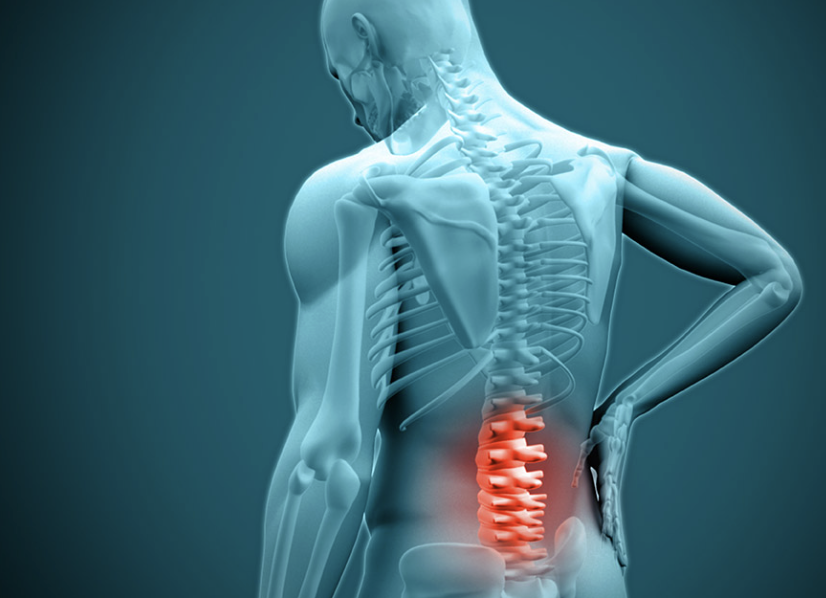
When Back Pain Isn’t “Just a Strain”
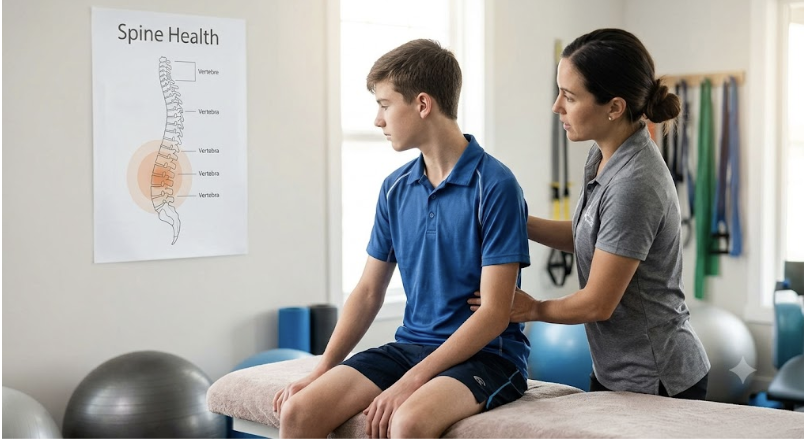
It’s common for young athletes to experience aches and pains during periods of heavy training.However, persistent lower back pain that develops gradually—especially during sports involving running, jumping, gymnastics, cricket or tennis —may be a sign of a lumbar spine bone stress reaction.
Early recognition and appropriate management are important. Left untreated, a bone stress reaction can progress into a stress fracture, resulting in a much longer recovery and time away from sport.
What Is a Bone Stress Reaction?
Bones are living tissues that constantly adapt to the demands placed upon them. Regular exercise helps bones become stronger, which is one reason physical activity is so beneficial for overall health.
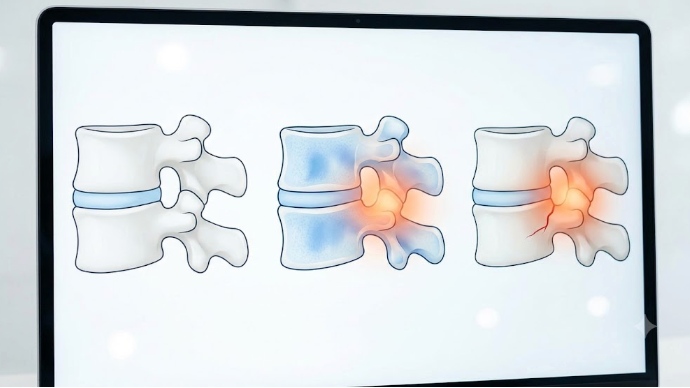
However, when training loads increase faster than the body can adapt, small areas of bone damage can develop. This is known as a bone stress injury (BSI).
Bone stress injuries exist on a spectrum:
- Bone irritation and inflammation
- Bone oedema (swelling within the bone)
- Stress fracture
Why Does It Occur in the Lumbar Spine?
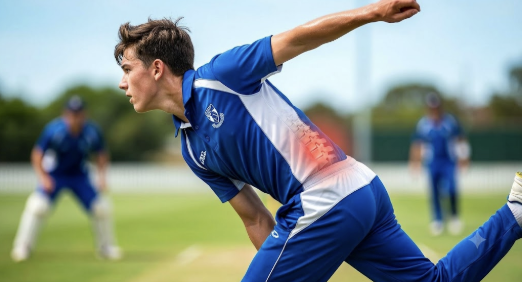
The lumbar spine, particularly a structure called the pars interarticularis, is exposed to significant forces during sports that involve:
- Repeated back extension (arching backwards)
- Twisting and rotation
- Running and jumping
- Fast bowling in cricket
- Gymnastics and dance movements
When these movements are repeated frequently without adequate recovery, the bone may struggle to keep up with the demands being placed upon it.
Why Are Teenagers at Higher Risk?
Research shows that adolescents, particularly those aged 15–19 years, represent the largest group affected by bone stress injuries.
This increased risk occurs because:
Rapid Growth
During growth spurts, bones lengthen quickly, but bone mineralisation may temporarily lag behind. This creates a period where bones can be more vulnerable to stress-related injury.
Increasing Training Demands
Many adolescent athletes are:
- Training more frequently
- Competing at higher levels
- Participating in multiple teams
- Specialising in a single sport year-round
These factors can significantly increase loading on the skeleton.
Common Risk Factors
Bone stress reactions are rarely caused by a single factor. Often, several contributing factors combine together.
Common risk factors include:
Sudden Changes in Training
The most common trigger is a recent change in:
- Training volume
- Training intensity
- Playing surface
- Footwear
- Sporting technique
- Frequency of competition
Previous Stress Fractures
Athletes who have experienced a stress fracture previously have a higher risk of developing another one.
Low Energy Availability
When athletes are not consuming enough calories to support both daily life and training demands, bone health can be negatively affected.
This may occur with:
- Restrictive eating habits
- Unintentional under-fuelling
- Eating disorders
- Excessive training loads
Hormonal Factors
Hormonal disturbances can reduce bone strength and healing capacity. This may include menstrual irregularities in female athletes.
Biomechanical Factors
Movement patterns, technique issues, muscle weakness, or poor load distribution through the body can contribute to excessive stress on specific regions of bone.
What Are the Symptoms?
Athletes with a lumbar spine bone stress reaction typically report:
Gradual Onset Pain
Pain usually develops slowly over several weeks rather than after a specific injury.
Pain During Sport
Symptoms often occur during:
- Running
- Jumping
- Fast bowling
- Throwing
- Backward bending
- Rotational movements
Pain With Lumbar Extension
One of the hallmark signs is pain when arching the lower back backwards.
As the injury progresses, pain may:
- Become more localised
- Occur earlier during activity
- Persist after training
- Interfere with daily activities
How Is It Diagnosed?
A thorough assessment begins with a detailed history and physical examination.
If a bone stress injury is suspected, medical imaging may be required.
MRI Scans
MRI is generally considered the preferred imaging option because it:
- Detects early bone stress changes
- Identifies bone oedema
- Avoids radiation exposure
- Helps distinguish bone injuries from other causes of back pain
Early diagnosis is important because treatment outcomes are generally better when intervention occurs before a stress reaction progresses to a stress fracture.
Treatment: What Does Recovery Look Like?
The most important principle of treatment is reducing the activities that continue to stress the injured bone.
This does not necessarily mean complete inactivity.
Relative Rest
Athletes typically need to modify or temporarily stop aggravating activities, particularly those involving:
- Running
- Jumping
- Repetitive spinal extension
- Rotational loading
Maintaining Fitness
Alternative exercise options often include:
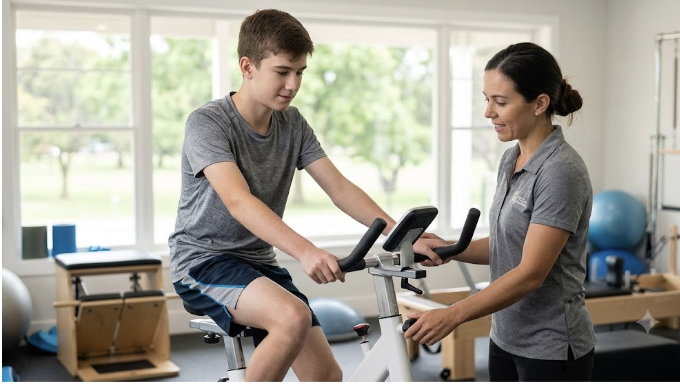
- Stationary cycling
- Hydrotherapy
- Swimming
- Pilates-based rehabilitation
- Strength training modifications
- Anti-gravity treadmill programs (where available)
These activities help maintain fitness while allowing the injured bone to heal.
Addressing Underlying Risk Factors
Successful rehabilitation should identify and address contributing factors such as:
- Training load errors
- Strength deficits
- Movement dysfunction
- Nutrition concerns
- Recovery strategies
- Growth-related considerations
How Long Does Recovery Take?
Research suggests that return to unrestricted sport for bone stress injuries often takes approximately 12–13 weeks, although recovery can range from 6 to 30 weeks depending on severity.
Athletes who continue training despite symptoms often experience longer recovery periods.
Returning to Sport Safely
Returning too quickly can increase the risk of re-injury.
A gradual return-to-sport program should include:
- Resolution of symptoms
- Restoration of strength and mobility
- Progressive reintroduction of sport-specific movements
- Careful monitoring of training loads
- Ongoing management of risk factors
Any recurrence of bone pain should be taken seriously and reviewed promptly.
When Should You Seek Help?
If you or your child experiences persistent lower back pain that:
- Develops gradually
- Worsens during sport
- Is aggravated by arching backwards
- Persists beyond a few weeks
It is worth seeking professional assessment.
Early diagnosis and appropriate management can significantly reduce recovery time and help athletes return to the sports they love safely and confidently.
How Physiotherapy Can Help
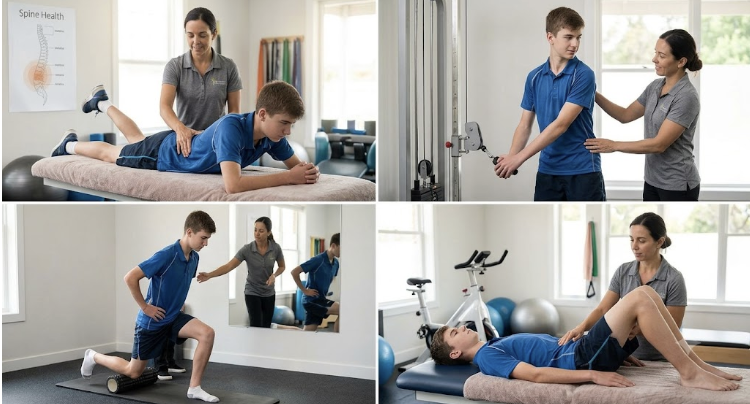
At our clinic, we provide comprehensive assessment and management of sports-related bone stress injuries. Our approach focuses on accurate diagnosis, load management, strength and conditioning, movement analysis, and safe return-to-sport planning to support long-term athletic performance and bone health.
Written by Daniel Wainwright, Principal Physiotherapist at Prime Physiotherapy