We’ve all done it, at some time or another. Whether it’s coming down from taking a mark in an AFL game or stepping off the curb, we all know the pain of a rolled ankle, the sickening crunch that can accompany it, and the limitations to our lives that come in the following days, weeks or months.
But why can I sometimes walk it off, and other times I’m out for weeks or months? Is there a way to know the difference? And either way – what’s my next step?
The Ankle Joint
The ankle is the joint complex consisting of the tibia (shin), fibula (smaller bone on the outside of the shin) and talus (ankle bone). It allows the foot to move up and down, turn in or out, or roll in or out.
How bad is it?
While it may be pretty tricky to give yourself an accurate prognosis of recovery within the first minutes or even the first 24 hours after injury, it is important to know if getting a scan is necessary.
If you can’t weight-bear for at least 4 steps on that foot immediately after injury, or when trying a little while later, an x-ray is required to rule out a fracture.
Similarly, if you have tenderness on the back of the ‘ankle bone’ on the inside or outside of the ankle (ie the tip of tibia or fibula), an x-ray may also be indicated.
Where is my pain?
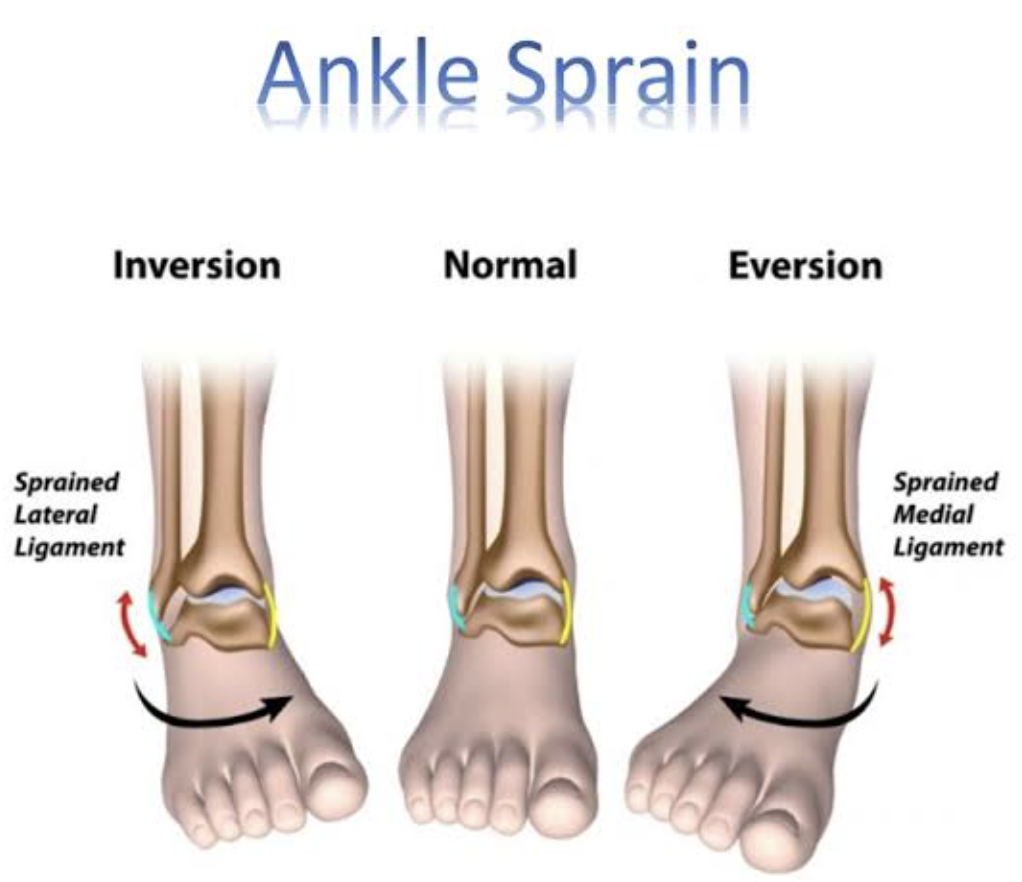
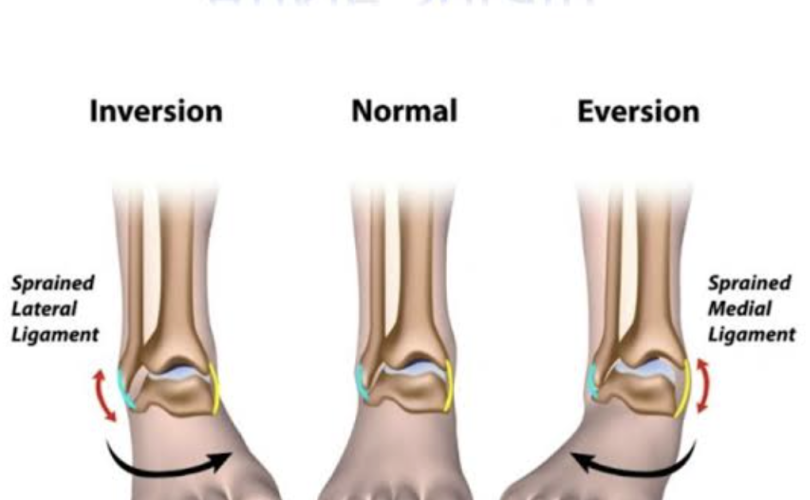
Lateral (outside): The most common ankle sprains and injuries happen when the foot rolls inwards, and the main pain occurs on the outside of the ankle. There are 3 main ligaments and a few tendons on the outside of the ankle that may be injured.
A very light sprain of one of these may result in just a few days of discomfort and no real time off sport, however a rupture of one or more of these in the worst case scenario can result in up to 3 months of rehabilitation.
Medial (inside): The ligaments on the inside of the ankle may be injured when the foot rolls outwards, or with more traumatic causes of injury. The deltoid ligament is the main ligament on this side, and is made up of a few different ligaments itself. Again, this can be weeks to months of rehabilitation depending on the severity of injury.
High Ankle (syndesmosis): A high ankle sprain is when the ligament between the two shin bones, the tibia and fibula, is injured. Pain is usually felt in front of the ankle, at the base of the shin and sometimes running up the shin. This is a more serious injury, and even lower grade sprains usually require some time in a boot, with weightbearing x-ray to help diagnose. A high ankle sprain/tear usually takes 12 weeks at a minimum for a full recovery and return to sport.
So – I’m injured. What is my next step?
- Check if there’s any reason for an emergent scan – if there’s a possibility of fracture, as discussed above.
- Lateral or medial ankle pain can be initially responded to with the PEACE acronym
- If lateral or medial ankle pain is still quite painful and restrictive to movement or activity after 1-3 days, book in with a physiotherapist to get a proper assessment and aid a quick recovery!
- If a high ankle sprain is suspected, book an immediate assessment with a physiotherapist, who can provide a boot and refer to a GP and scans as indicated.
PEACE – for managing acute injuries:
- Protect – restrict movement and activity to avoid further injury.
- Elevation – elevate the injured limb for periods of time.
- Avoid Anti-inflammatories – the body’s natural healing process involves the inflammatory process. The same principle encourages not using ice long term.
- Compression – use bandages or stockings to minimise swelling.
- Education – seek education regarding the body’s healing process.
Physiotherapy
At Prime Physiotherapy, we are well-equipped to handle any level of ankle injury. We seek to:
- Assess well to understand whether imaging is indicated, or if prescribing a boot or crutches is helpful.
- Restore range of motion quickly through manual therapy and targeted exercises.
- Build strength, speed and stability.
- Finally, optimise the body for safe return to sport or activity, by ensuring that you are ready and able to perform well, with as minimal risk of re-injury as possible. This will involve sport-specific, individualised exercises, and key assessment criteria for progressing to the return to sport.
Written by Joshua Round, APA Physiotherapist at Prime Physiotherapy.