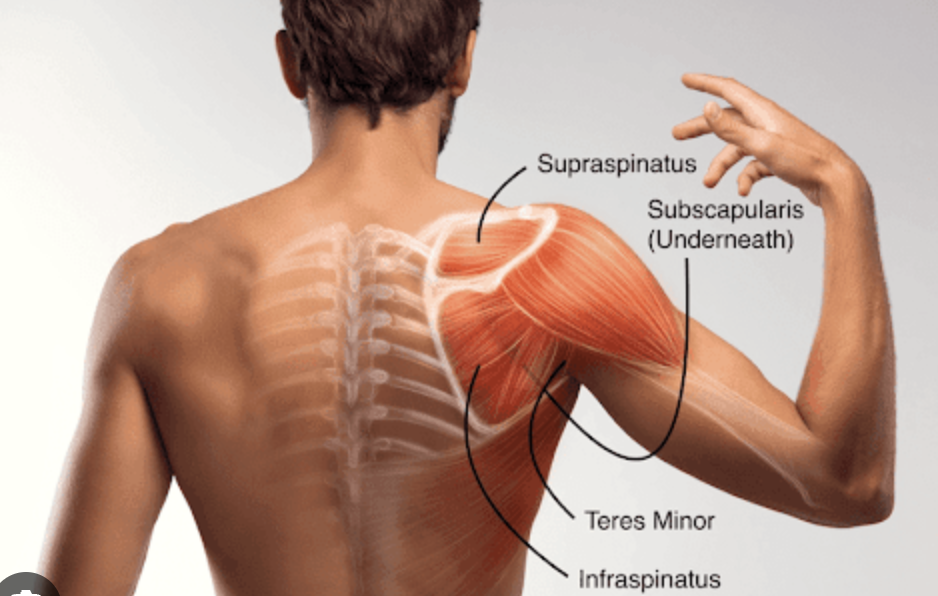
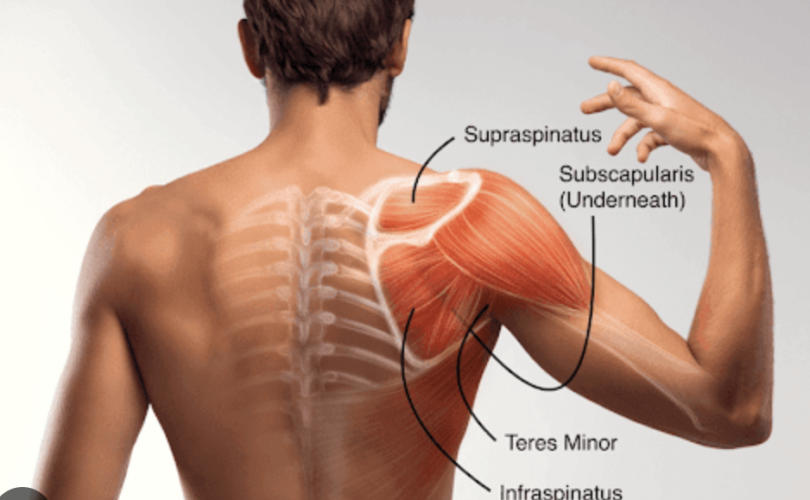
The rotator cuff is a group of four muscles that help support and stabilise the shoulder joint. These muscles work together to keep the ball of the shoulder joint centred in the socket while the arm moves.
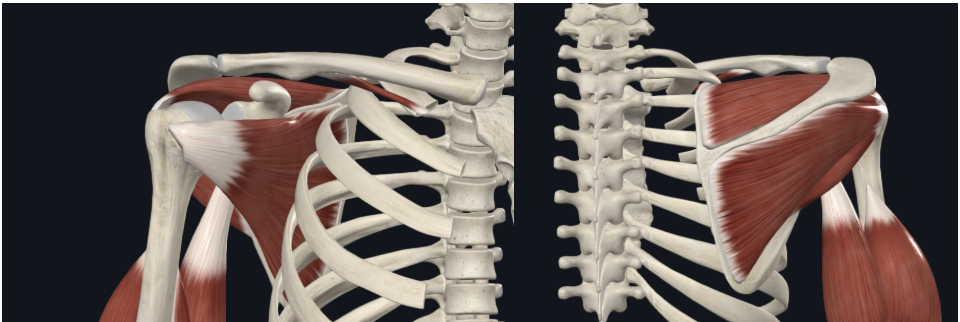
The four rotator cuff muscles are:
- Supraspinatus
- Infraspinatus
- Teres Minor
- Subscapularis
Although these names sound complicated, their role is simple and very important — they help provide shoulder stability, strength, and control during everyday activities such as lifting, reaching, and throwing.
Common Rotator Cuff Injuries
The rotator cuff is one of the most common sources of shoulder pain.
Common rotator cuff conditions include:
- Rotator cuff tendinopathy (irritation or overload of the tendon)
- Calcific tendinopathy (calcium deposits forming within the tendon)
- Partial-thickness tears
- Full-thickness tears
What Causes Rotator Cuff Tears?
Rotator cuff tears generally occur in two ways:
Traumatic Tears
These tears happen suddenly following an injury, such as:
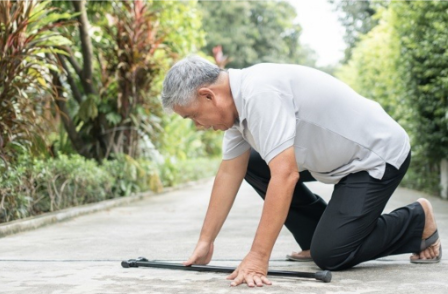
- Falling onto an outstretched arm
- Lifting something heavy unexpectedly
- Sporting injuries
Traumatic tears are more common in people over the age of 40, as the tendons naturally become less resilient with age.
Degenerative Tears
Degenerative tears develop gradually over time due to wear and tear on the tendon.
These are more commonly seen in people over the age of 60 and may occur from:
- Repetitive overhead activities
- Long-term strain on the shoulder
- Age-related tendon changes
Sometimes these tears can develop slowly without a specific injury.
Partial vs Full-Thickness Tears
A rotator cuff tear may be described as either partial-thickness or full-thickness.
A simple way to understand this is to imagine a cotton sock:
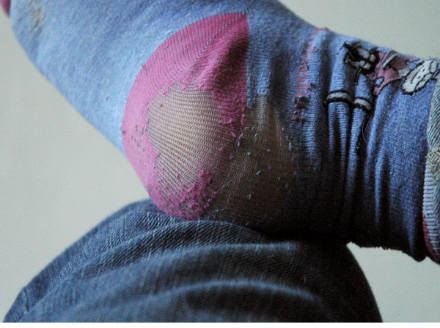
- A partial-thickness tear is like the fabric at the heel becoming thin and worn
- A full-thickness tear is like a hole forming all the way through the sock
Not all tears require surgery. Many people improve with physiotherapy, strength training, and activity modification.
When Is Surgery Needed?
Surgery may be recommended for:
- Large tears
- Traumatic tears
- Significant weakness
- Younger or more active individuals
- Symptoms that do not improve with physiotherapy
Rotator cuff repair surgery is usually performed arthroscopically (keyhole surgery) to repair the torn tendon.
Recovery after surgery takes time and patience, with most people recovering over 9–12 months.
Recovery After Rotator Cuff Surgery
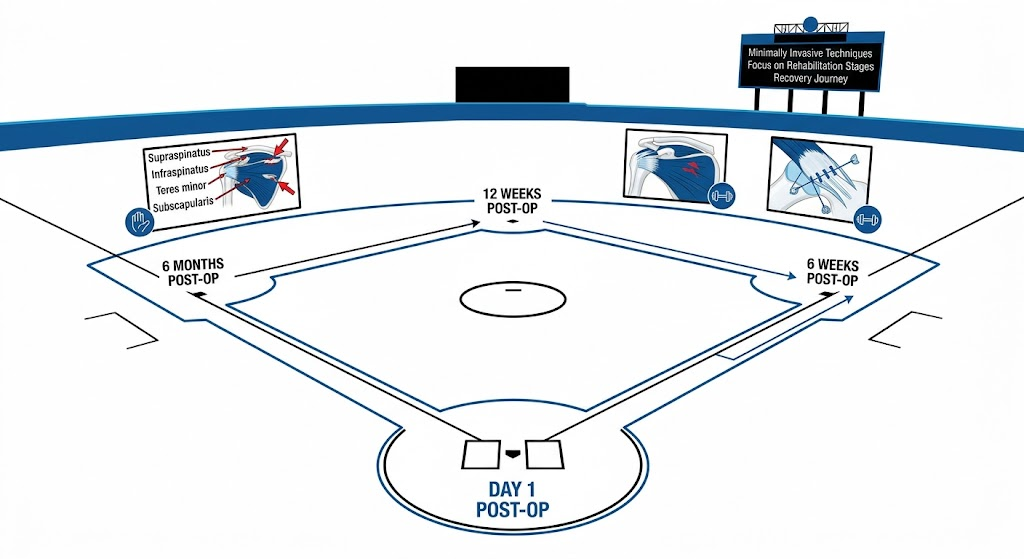
Recovery is usually divided into four phases.
Phase One: Early Recovery (Day 1 to 6 Weeks)
This is often the most uncomfortable stage after surgery.
During this phase:
- A sling is usually worn for 4–6 weeks
- Gentle exercises for the elbow, wrist, and hand begin early
- The shoulder is protected while the repair starts to heal
Phase Two: Restoring Movement (6 to 12 Weeks)
The sling is gradually removed and shoulder movement begins to improve.
During this phase:
- Light daily activities can slowly resume
- Lifting is limited to very light objects (such as a cup of coffee or phone)
- Patients should avoid reaching the hand behind the back
- Gentle stretching and assisted exercises begin
Phase Three: Rebuilding Strength (3 to 6 Months)
Once movement improves, strengthening exercises gradually begin.
This phase includes:
- Progressive resistance exercises
- Theraband and light weight training
- Continued flexibility work
By around six months, many patients feel approximately 80% recovered.
Phase Four: Long-Term Strength and Maintenance (6 to 12 Months)
The final stage focuses on rebuilding shoulder strength, endurance, and confidence.
Ongoing exercise is important to:
- Reduce the risk of re-injury
- Improve shoulder function
- Support long-term recovery
When Should You Seek Help?
If you are experiencing shoulder pain, weakness, difficulty lifting your arm, or pain that is not improving, an assessment with a physiotherapist can help identify the cause and guide appropriate treatment.
At Prime Physiotherapy, physiotherapists can assess your shoulder, provide an accurate diagnosis, and create a personalised rehabilitation plan to help you return to daily activities, work, and sport safely.
Written by Ellicia Davis, Physiotherapist at Prime Physiotherapy