The shoulder is one of the most mobile joints in the body. It allows us to lift, rotate, reach, throw, and move our arm in many different directions throughout daily life and sport.
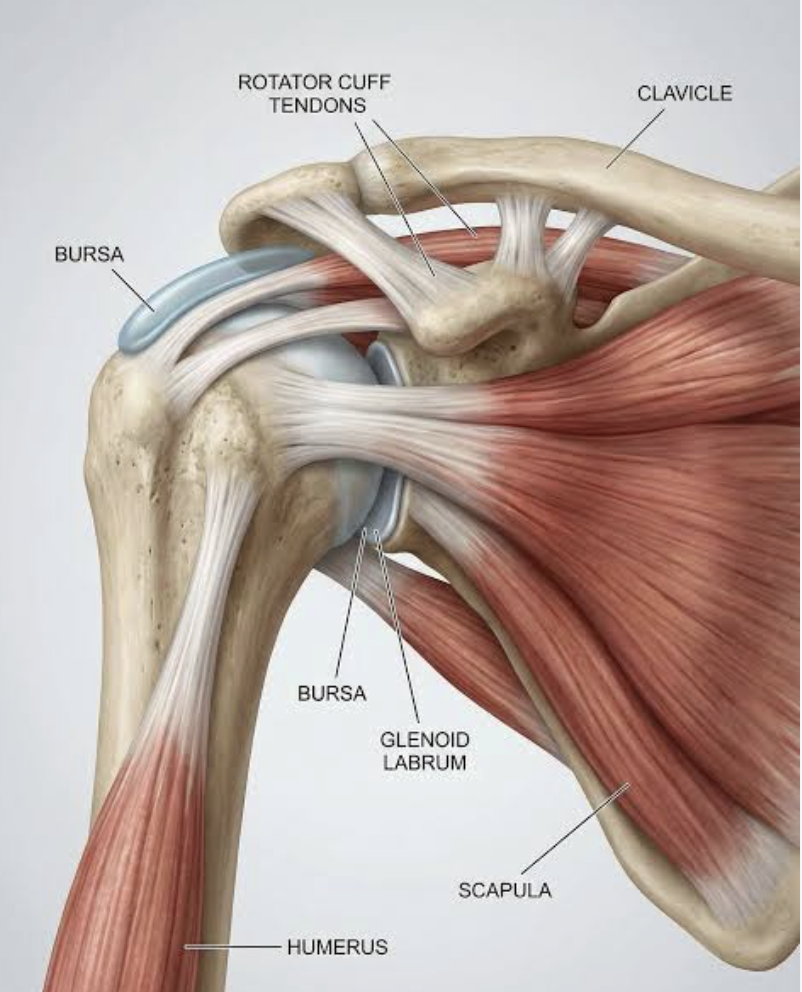
The shoulder works like a “ball-and-socket” joint. The ball is the top of the upper arm bone (the humerus), and the socket is part of the shoulder blade (the glenoid). A common way to describe it is like a golf ball sitting on a tee — the ball is much larger than the socket it sits on.
This design gives the shoulder excellent mobility, but it also means the joint is naturally less stable than other joints in the body. As a result, shoulder injuries and dislocations are relatively common, particularly in contact sports and repetitive overhead activities.
How Is the Shoulder Kept Stable?
The shoulder relies on several important structures to keep the joint stable and functioning properly.
Ligaments and Joint Capsule
A strong capsule of ligaments surrounds the shoulder joint. These ligaments help hold the ball in the socket while still allowing the shoulder to move freely.
They act as the shoulder’s “passive” stabilisers, helping prevent the joint from slipping out of place.
Rotator Cuff Muscles
The rotator cuff is a group of four muscles that surround the shoulder joint. These muscles work together to keep the ball centred in the socket during movement.
The rotator cuff plays a very important role in shoulder strength, control, and stability — particularly during lifting, reaching, and sporting activities.
When these muscles become weak, overloaded, or injured, shoulder pain and instability can occur.
What Are Bursae?
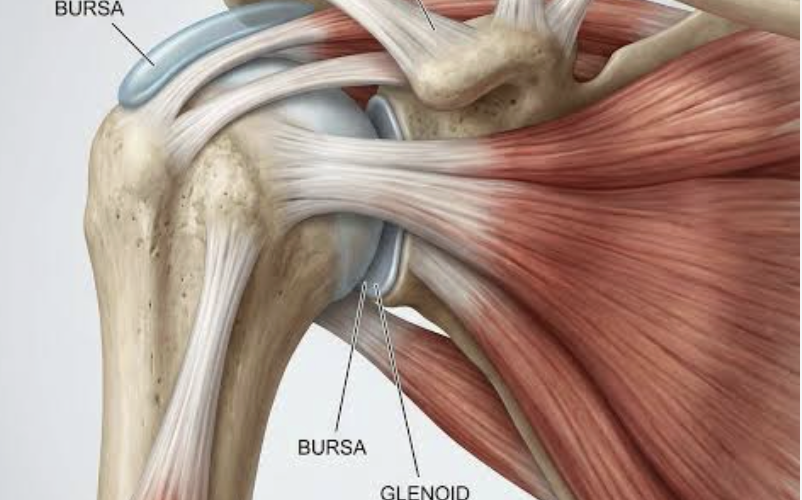
The shoulder also contains small fluid-filled sacs called bursae. The main bursae in the shoulder are the subacromial and subdeltoid bursae.
These bursae act like cushions, helping reduce friction between the muscles, tendons, and bones as the shoulder moves.
Normally, bursae are very thin. However, with repetitive strain, poor movement patterns, overload, or injury, they can become inflamed and swollen. This condition is known as bursitis and can cause:
- Shoulder pain
- Pinching sensations
- Pain when lifting the arm
- Difficulty sleeping on the affected side
Why Is Shoulder Pain So Common?
Because the shoulder is such a mobile and complex joint, it is more vulnerable to injury and irritation than many other parts of the body.
Common causes of shoulder pain include:
- Rotator cuff injuries
- Shoulder bursitis
- Shoulder instability or dislocation
- Muscle weakness
- Poor posture or movement patterns
- Sporting or gym-related overload
When Should You Seek Help?
If you are experiencing shoulder pain, weakness, stiffness, or instability, an assessment with a physiotherapist can help identify the cause and guide appropriate treatment.
At Prime Physiotherapy, physiotherapists can assess your shoulder, provide an accurate diagnosis, and develop an individualised treatment plan tailored to your goals and lifestyle.
Written by Ellicia Davis, Physiotherapist at Prime Physiotherapy