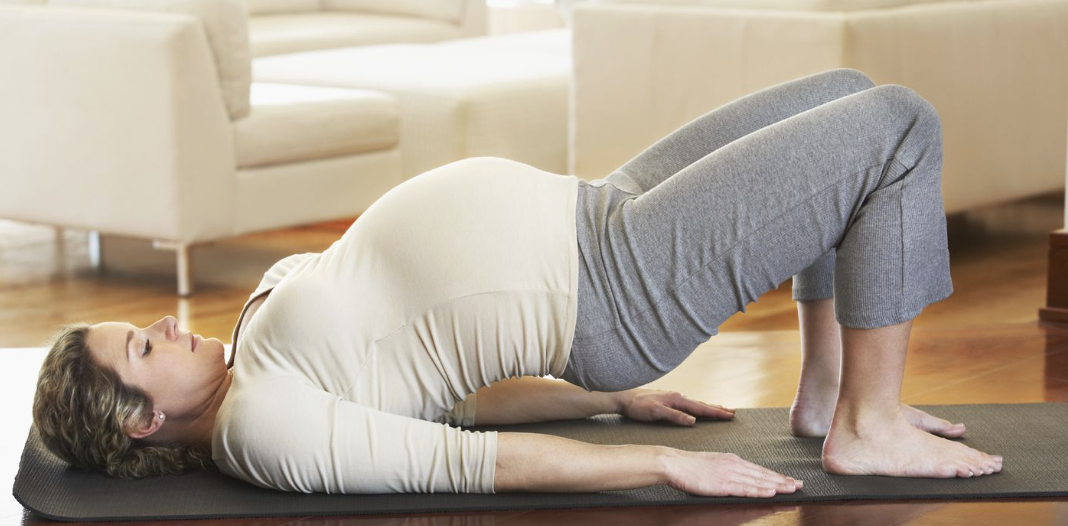
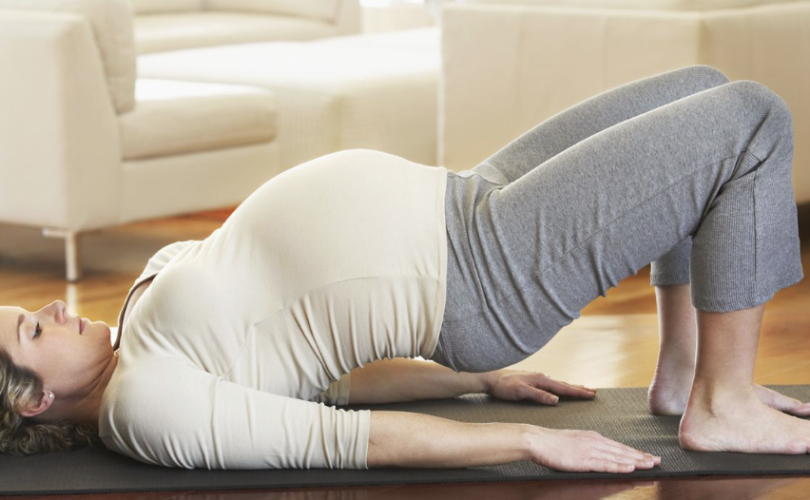
Pelvic floor muscle training is one of the safest and most beneficial types of exercise you can do during pregnancy. High-quality research shows that pelvic floor exercises can:
- Reduce labour trauma.
- Shorten the second stage of labour by up to 20 minutes.
- Reduce urinary incontinence during pregnancy.
International uro-gynecological guidelines strongly support pelvic floor exercises in pregnancy. They are considered a “no harm” exercise with no negative consequences when done correctly.
Where Are the Pelvic Floor Muscles?
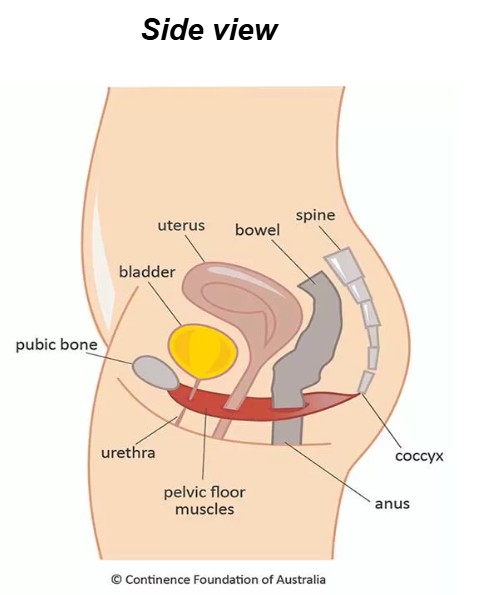
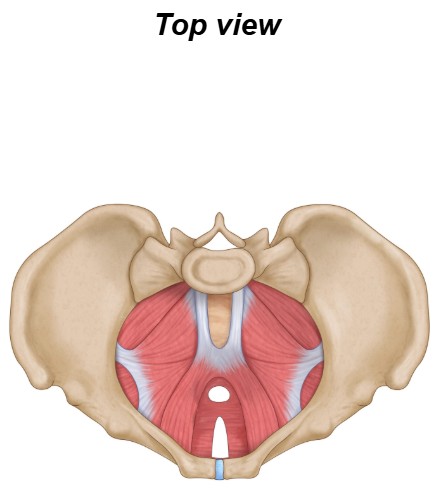
Your pelvic floor muscles:
- Support the bladder, bowel and uterus.
- Span from the pubic bone to the coccyx.
- Help with bladder and bowel control.
These muscles can be activated by cues such as:
- “Hold in a tampon.”
- “Stop a fart.”
- “Squeeze as though you’re stopping a wee.”
Choose the cue that works best for you. A correct contraction should happen without squeezing your butt, holding your breath or tightening your abs.
How to Strengthen Your Pelvic Floor
A well-rounded pelvic floor program includes strength, endurance, speed and functional training.
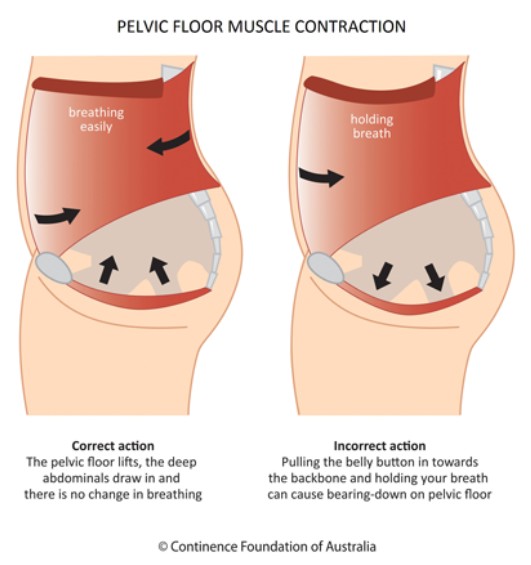
Your Strength and Endurance Goals:
- Hold the pelvic floor while breathing.
- Endurance: hold for 10 seconds, repeat 10 times.
- Speed: Squeeze and cough without letting go.
- Function: hold the pelvic floor gently (“sub-maximally”) during everyday activities like:
- lifting a washing basket
- standing up from a chair
- gym exercises
- lifting a washing basket
The Importance of Relaxation
Strength is only half the picture; relaxation is equally important.
During labour, your baby needs space to move through the birth canal. If your pelvic floor is contracting against the uterine contractions, this may slow labour. This challenge is known as co-contraction, where the pelvic floor is unintentionally tightening instead of relaxing.
To allow smooth progression during labour:
- Relax your pelvic floor between contractions.
- Practice letting go, not just squeezing.
Pelvic floor exercises, both contraction and relaxation, are essential throughout all stages of life but particularly during pregnancy.
Do You Need Help?
If you’re unsure whether you’re contracting correctly, not sure if you’re relaxing correctly or would like a personalised assessment, contact our women’s health physiotherapists at Prime Physiotherapy.
We are here to support you through your pregnancy journey.

References
Woodley, S. J., Boyle, R., Cody, J. D., Mørkved, S., & Hay-Smith, E. J. C. (2020). Pelvic floor muscle training for preventing and treating urinary and faecal incontinence in antenatal and postnatal women. Cochrane Database of Systematic Reviews, 2020(5), CD007471.
https://doi.org/10.1002/14651858.CD007471.pub4American College of Obstetricians and Gynecologists. (2020). Physical activity and exercise during pregnancy and the postpartum period (Committee Opinion No. 804).
https://www.acog.org/clinical/clinical-guidance/committee-opinion/articles/2020/04/physical-activity-and-exercise-during-pregnancy-and-the-postpartum-period