Why It Happens and What You Can Do About It
Do you notice small leaks of urine when you cough, sneeze, run, or jump?
You’re not alone — and you’re not doing anything wrong. This very common symptom is known as Stress Urinary Incontinence (SUI). It occurs when the pressure inside the bladder becomes greater than the pressure in the urethra, causing urine to escape during moments of physical effort.
SUI is especially common during pregnancy, the post‑natal period, and around perimenopause and menopause, when hormonal changes and shifts in body structure can make bladder control more challenging.
Why Does Stress Incontinence Happen?
During pregnancy and after birth, hormonal changes and increased load on the pelvic region can reduce the ability of the urethra to stay closed under pressure. Increased load can be from lifting, impact exercise or standing all day but also from carrying excessive body weight. Similarly, during perimenopause and menopause, declining oestrogen levels can affect tissue strength and muscle function, making leaks more likely.
These are vulnerable times for bladder control — but they are also times when targeted support can make a significant difference.
How the Bladder Works
A quick anatomy refresher helps explain why leaks occur.
Bladder
- Stores urine delivered from the kidneys.
- Its muscular wall (the detrusor) stays relaxed during storage and contracts during voiding.
Urethra
- The tube that carries urine out of the body.
- Voiding phase: opening to allow release of urine
- Storage phase: closure to hold urine in the bladder
Muscles Involved in Bladder Control
Four key muscle groups work together to maintain continence:
- Detrusor muscle
- Internal urethral sphincter
- External urethral sphincter (most important for stress urinary incontinence)
- Pelvic floor muscles
When these systems are well‑coordinated, the bladder stores and releases urine efficiently. When one or more of them becomes weakened, overactive, or poorly coordinated, leaks can occur.
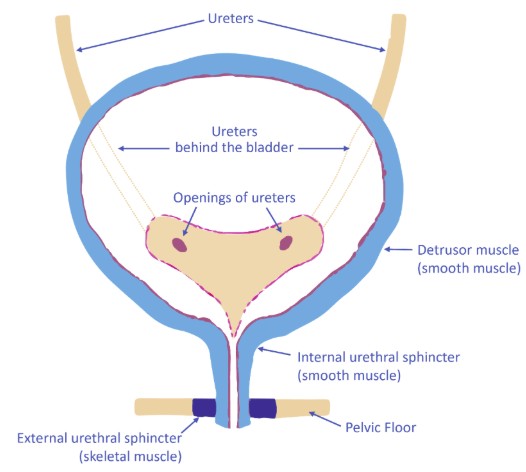
Image from https://www.wellspect.co.uk/education/articles/urinary-bladder-function/
When Bladder Control Is Most Vulnerable
You’re more likely to experience reduced bladder control during:
- Pregnancy
- Post‑natal recovery
- Perimenopause and menopause
These stages involve hormonal shifts, changes in tissue elasticity, and variations in muscular support — all of which can influence continence.
What Can You Do to Improve Symptoms?
The good news is that bladder leaks are treatable, and early intervention can make a big difference.
Strengthening the Pelvic Floor
If your pelvic floor muscles are underactive or weakened, targeted strengthening can help restore support to the bladder and urethra. This is beneficial if you currently experience leaks — and also as preparation for:
- Future pregnancies
- Midlife changes
- Healthy ageing
Addressing Overactivity
Not all leaks are caused by weakness. Sometimes the pelvic floor is overactive, meaning it’s gripping too tightly and unable to function effectively. In these cases, strengthening alone won’t help — but a tailored physiotherapy approach will.
How Physiotherapy Can Help
Women’s health physiotherapists at Prime can assess:
- Pelvic floor strength and coordination
- Bladder habits
- Muscle overactivity
- Contributing lifestyle factors
From there, we create a personalized treatment plan that may include pelvic floor training, relaxation strategies, bladder retraining, and education to help you regain confidence and control.
Written by Cathy Cox, Head of Women’s Health Physiotherapy, Prime Physiotherapy