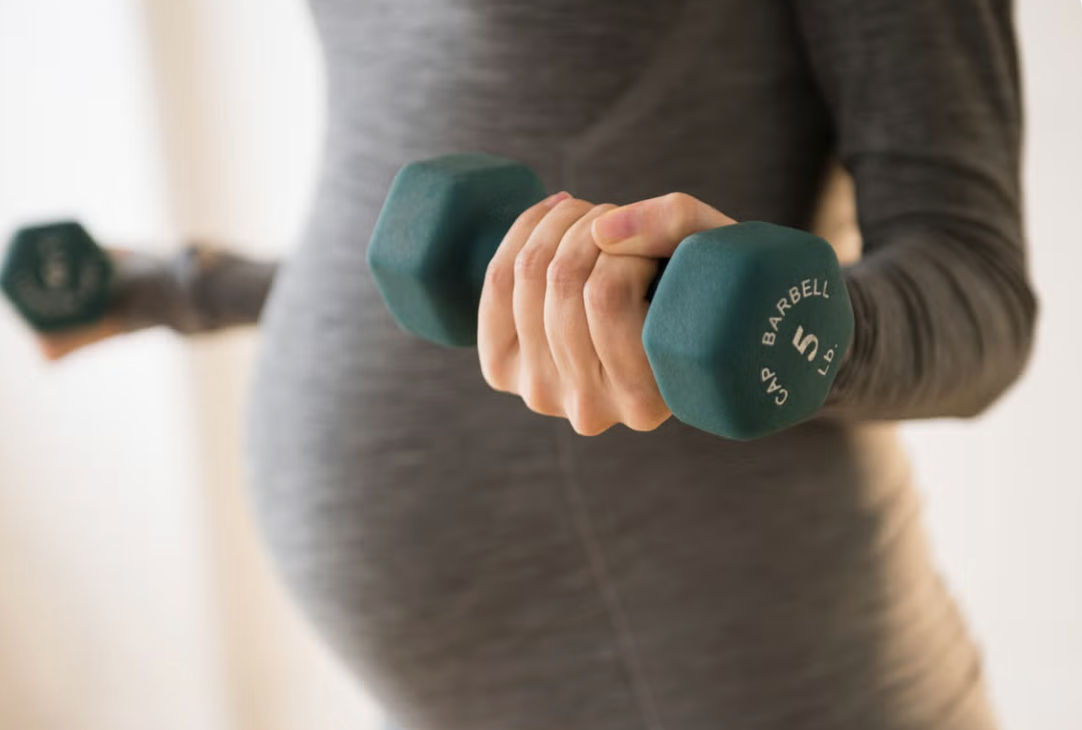
Strength training can be a safe and effective way to maintain fitness during pregnancy when performed with appropriate modifications and awareness. Previous blogs have addressed abdominal strengthening and general fitness; the same principles apply to gym- and weight-based exercise.
Is Weight Training Safe During Pregnancy?
Restrictions on lifting weights may apply if you have an “at-risk” pregnancy. In these cases, exercise—particularly resistance training—should always be discussed with and cleared by your treating doctor.
For women without medical contraindications, strength training can usually be continued with sensible adjustments.
General Principles for Strength Training in Pregnancy
When exercising with weights during pregnancy, the following principles apply:
- Exercise according to your individual capacity
- Avoid dehydration
- Be mindful of heat regulation and avoid overheating
- Exercise intensity should generally remain between 60–80% of aerobic capacity, depending on your fitness level
- Positioning: Avoid lying flat on your back after 20 weeks of pregnancy
- Frequency: similar to your pre-pregnancy exercise routine
There are no specific restrictions on how much weight you can lift while pregnant. In early pregnancy, most women can start at their pre-pregnancy capacity, with the goal to maintain strength rather than significantly increase load.
Pelvic Floor Protection During Gym Exercise
A key consideration when strength training during pregnancy is protecting your pelvic floor.
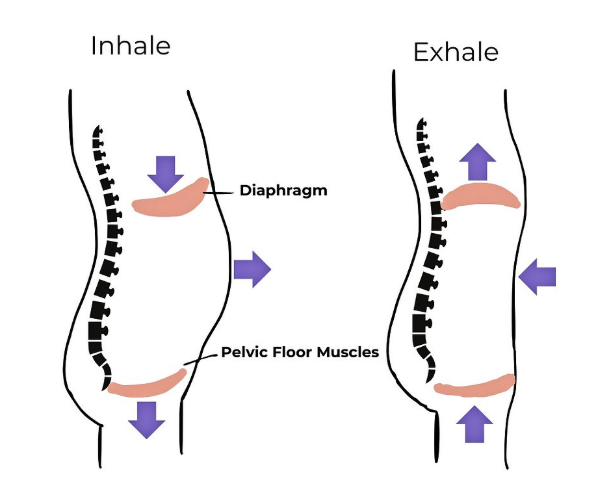
The first principle is to gently engage your pelvic floor and deep core muscles while exercising. This is not a maximal contraction, but a supportive “hold”. This engagement also helps maintain correct posture and technique throughout each movement.
Practical Strategies to Protect the Pelvic Floor
- Seated exercises help reduce downward pressure on the pelvic floor.
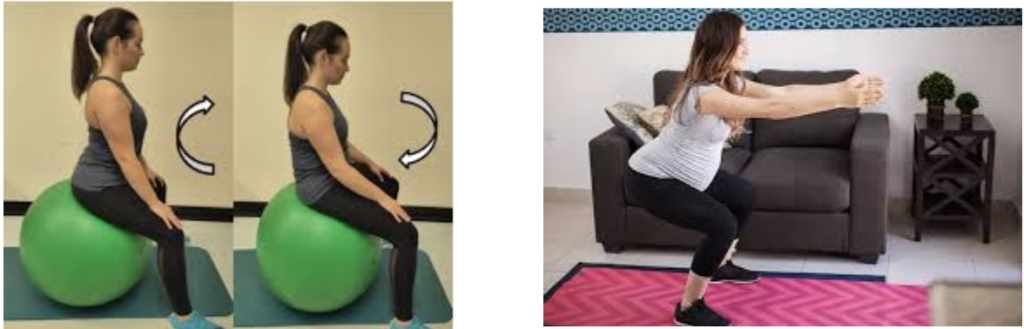
- Narrow-stance squats, with feet approximately pelvic-width apart.
- Maintaining good exercise form, which is especially important as connective tissue becomes more flexible and ligament support reduces during pregnancy.
- Breathing out during the lifting phase to reduce downward pressure on the pelvic floor
Key Takeaway
As your body changes throughout pregnancy, it is important to reassess regularly:
- The amount of weight you are lifting
- The positions used during exercises
- The intensity of your programme
- Your exercise technique and form
Listening to your body and adjusting these variables as needed will allow you to continue strength training safely and confidently during pregnancy.
References
American College of Obstetricians and Gynecologists. (2020). Physical activity and exercise during pregnancy and the postpartum period (Committee Opinion No. 804). https://www.acog.org/clinical/clinical-guidance/committee-opinion/articles/2020/04/physical-activity-and-exercise-during-pregnancy-and-the-postpartum-period
Australian Government Department of Health and Aged Care. (2023). Physical activity and exercise during pregnancy: Guidelines brochure. https://www.health.gov.au/sites/default/files/2023-11/physical-activity-and-exercise-during-pregnancy-guidelines-brochure.pdf
Written by Cathy Cox, Head of Women’s Health Physiotherapy, Prime Physiotherapy
Edited by Li Zhou, Women’s Health Physiotherapist, Prime Physiotherapy & Valeria Vallejos, Remedial Massage Therapist, Prime Physiotherapy